ROIP for Retail & Event Management: Use Cases & Success Stories
📅 November 20, 2025

Push-to-talk over cellular (PTT over cellular, also known as PoC or PTToC) is quickly becoming popular in the industrial operations, public safety, logistics, and field service sectors. With LTE (4G) and 5G networks coming of age, the capabilities, dependability, and range of PTT applications have transcended most of the constraints of old radio systems. This blog will discuss that LTE and 5G networks can improve the performance of PTT and coverage, the ways this is achieved through an architecture or protocol improvement, the tradeoffs in practice, and a preview.
A PTT application (or push-to-talk application) applies a walkie-talkie type of half-duplex voice (and more multimedia) communication to devices, such as smartphones, tablets, rugged devices, by using mobile networks. Rather than an active radio system, PTT over cellular activates LTE/5G (and occasionally Wi-Fi) to transmit voice/data traffic.
The main features of the contemporary PTT applications:
PTT over cellular will have significantly broader coverage (where it is available) than traditional two-way radios (because it does not require base station towers), lower capital requirement (because it requires no base station towers), and can support broader features (including multimedia, logging, etc.
But it is not a simple task to provide reliable and low latency voice communications over a cellular network that is packet switched. It is where LTE and 5G come in.
Here are the major ways in which LTE and 5G improve PTT performance and coverage:
The voice over packet networks had been characterized by delays in the establishment of calls and audio transfer in the previous networks. LTE and 5G, network backhaul, radio scheduling optimization, and voice-over-LTE (VoLTE) or voice over NR improvement ensure that round-trip delays are reduced, and the mouth to ear latency is minimal, allowing near-instantaneous talk.
In mission-critical PTT (TT standardized by 3GPP in Releases 13/14), there are strict KPIs based on call set-up times below some thresholds, and latency limits (e.g. target < 150-250 ms mouth-to-ear).
The 5G comes with network slicing and finer QoS control. Carriers have a chance to allocate the slices or virtual network partitions that have been optimized according to traffic on PTT (voice, group calls) such that PTT traffic is given priority even when the network is congested. This guarantees stable performanceAlso, LTE/5G provides differentiated QoS services (e.g. guaranteed bit rates, priority classes) that PTT applications can use.
The smaller the cellular network (the more small cells, the more base stations), the smaller the coverage holes: this implies that PTT users are less likely to enter the dead- zone. Current equipment is also able to do handover more smoothly between cells and even between LTE and 5G layers.
In addition, methods such as LTE-WLAN Aggregation (LWA) can enable devices to connect to LTE and Wi-Fi at the same time to a single stream of data- increasing capacity and coverage in double-wireless areas.
A powerful PTT system based on LTE/5G is likely to have a redundant network path (e.g. multiple SIMs, multiple carriers) such that when one network becomes unavailable or congested, the traffic will be re-routed to another. This enhances coverage and reliability in hostile or emergency conditions.
Though voice is used the most, LTE and 5G have higher data rates, which enable PTT applications to have multimedia capabilities: video push-to-talk, image or file sharing, maps, telemetry, and situational awareness. This makes an otherwise basic push-to-talk application an effective communications platform.
Delays caused by backhaul or long path routing are minimized by processing PTT traffic near the user (edge computing). In other implementations, the PTT servers or gateways are deployed locally (within the same region) so that voice traffic is not routed across global backbone unless needed, and responsiveness is enhanced.
To provide an idea of what is possible, a sample table of standard PTT performance improvements with LTE/5G (compared to older or overloaded networks) is shown below:
| Metric | Legacy/Pre-LTE | LTE / 4G | 5G / MCPTT | Notes |
| Call setup time | 500–800 ms or more | ~ 200–400 ms | < 150 ms (target) | MCPTT aims for fast setup |
| Mouth-to-ear latency | 200-300 ms | 100-200 ms | 50-150 ms | Depends on network & edge placement |
| Audio quality & noise handling | Basic codec, interference | HD voice, echo/noise cancellation | High fidelity + low error | Enhanced signal processing |
| Coverage holes | Significant | Lessened via densification | Minimal, with redundancy | Especially in indoor or underground |
| Multimedia support | Very limited | Some image sharing, messages | Full video, telemetry, maps | Enabled by higher bandwidth |
| Reliability / failover | Limited | Carrier fallback | Multi-path, slices, redundancy | Critical in mission systems |
According to market research, the PoC (PTT over cellular) market is surging, and the implementation of LTE and 5G is mentioned as key drivers of growth. In reality, properly implemented PTT systems in LTE/5G can provide voice transmission latencies of less than 0.5 seconds, system availability of 99.999, call setup and voice latency of less than 300 ms in most implementations.
However, network quality, backhaul capacity, server architecture (centralized vs distributed) and the status of the PTT app optimization (e.g. codec, buffering, jitter control) are critical to the actual performance.
Although LTE/5G open numerous possibilities, they still have a number of challenges:
In order to maximize LTE/5G PTT applications, remember:
The LTE and 5G networks are changing the capabilities of push-to-talk technology. These mobile networks allow PTT to be reliable and flexible- even in the mission-critical environment by providing lower latency, QoS prioritization, network slicing, redundancy, and sufficient bandwidth to support multimedia. The challenges still exist but with proper design (edge architecture, fallback, interoperability) the full potential of PTT over cellular can be achieved.
StackIOT has a strong, scalable, and secure PTT platform that fits organizations that want to create a solution specifically adapted to your domain. StackIOT provides performance and reliability-based cellular PTT solutions designed to deliver business quality to your enterprise- FTB- learn more at StackIOT.
1. What is PTT over cellular?
PTT over cellular refers to the process of providing push-to-talk voice (and more often data) communication over LTE/5G networks, so that walkie-talkie style communication is possible on cellular networks without having radio facilities.
2. What is the difference between a push-to-talk application and a voice call?
A PTT application is instant half-duplex voice: when a button is pressed, you speak and when it is released, you listen and there is little setup delay. It is mission communication oriented as opposed to normal phone calls.
3. Is LTE / 5G truly going to make the PTT reliable everywhere?
It goes a long way in terms of minimizing latency, allowing control over QoS, providing a dense coverage, and redundancy. However in extremely remote places where cellular coverage is unavailable, fallback radio or hybrid solutions are still possible.
4. What is MCPTT?
The 3GPP standard (Releases 13/14) that stipulates the services of PTT over LTE/5G with stringent KPIs, inter-operability, group management, QoS, and resilience capabilities is MCPTT (Mission Critical Push-to-Talk).
5. Is it possible to have PTT applications to work with legacy radio (LMR, P25)?
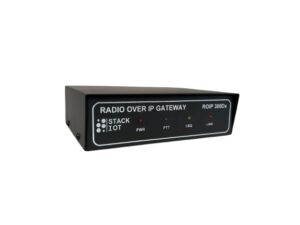
Yes. Interoperability is frequently provided through Radio over IP (RoIP) gateways providing the ability to seamlessly communicate between users of the PTT app and users of traditional radios.