
Unified Radio Interoperability System
Client: Security Agencies
Solution Provider: StackIOT Technologies Pvt. Ltd.
Solution: Radio Interoperability System (RIG-4 Series)
Background
Critical Security operations may entail the use of several communication technologies at the same time, such as old analog radios, digital radio systems, IP-based networks, smartphones, and the system of command centers. These systems commonly work individually and hence cross-platform communication tends to be challenging whenever carrying out crucial missions.
Security agencies often need an integrated communication system that would help them to properly integrate the current radio infrastructure with the advanced IP-based communication systems. This is aimed at enhancing coordination and situational awareness as well as the efficiency of command without substituting the available communication equipment.
Challenges
The security agencies communication system encountered a number of operation problems:
✔️ Interoperability problems: The various radio technologies (Analog VHF/UHF, DMR, NXDN) were not compatible with each other.
✔️ Poor coordination: The field radios, command centers and IP based communication systems worked independently.
✔️ Absence of centralized monitoring: Command centers were not able to monitor or easily control field communications.
✔️ Complexity of integration: It was not easy to create a radio network with the addition of smartphones, IP phones and video feeds.
✔️ Scalability issues: It was rather laborious to scale the communication infrastructure to accommodate the multi-site implementation.
These obstacles introduced delays in passing information and making the field missions less efficient.
Solution
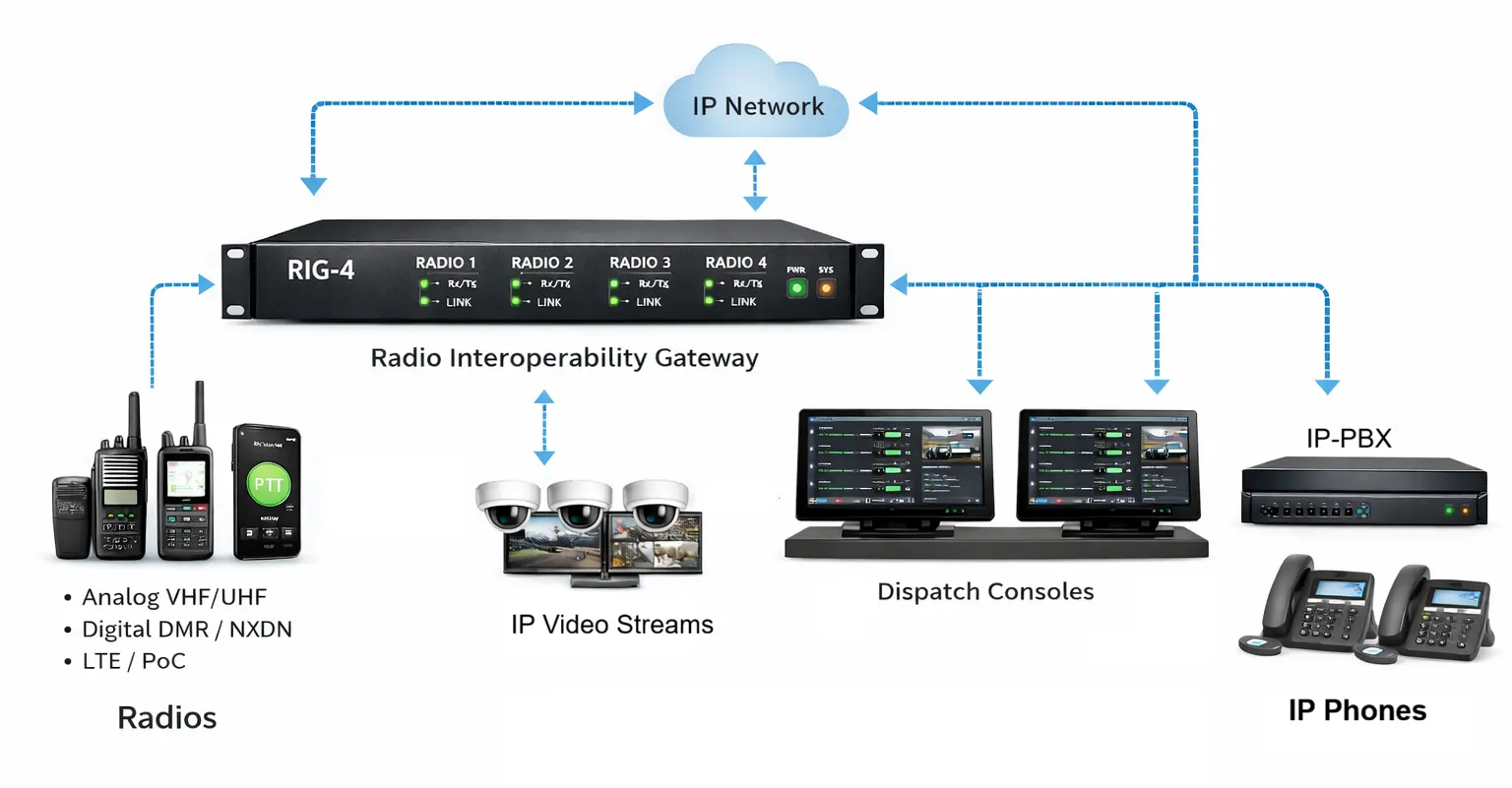
StackIOT developed a Radio Interoperability System which facilitates easy communication across various platforms.
Radio Interoperability System consists of two main components:
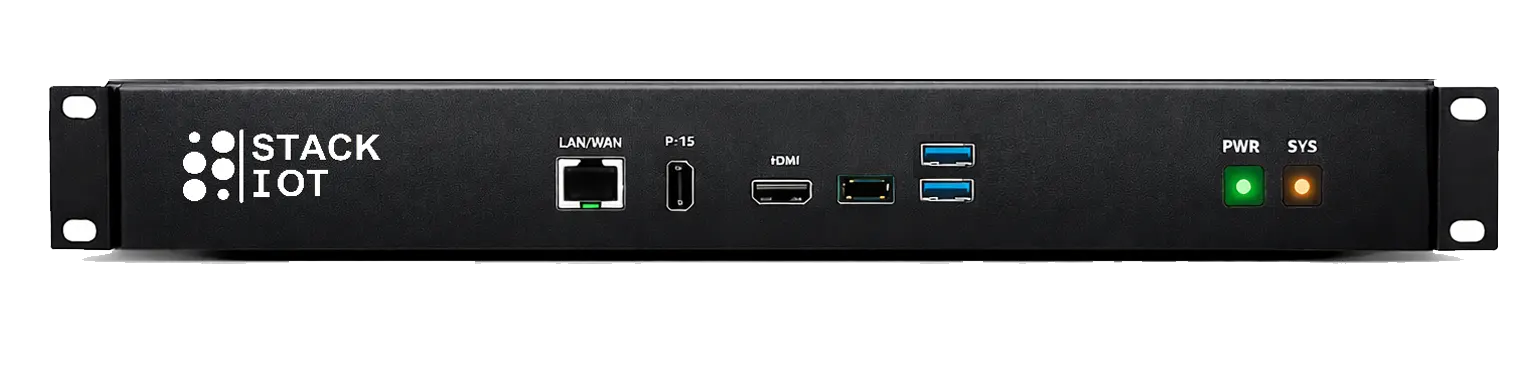
The MCU serves as the brain of the system. It carries the interoperability software, call routing, user access and central monitoring and logging.
The gateway is the hardware interface between IP systems and radio networks. It translates radio messages into IP streams allowing real time communication between radios, command consoles, smart phones and IP phones.
The major capabilities of the system are outlined below.
- Combination of analog and digital radios (VHF/UHF, DMR, NXDN)
- Field radio to dispatch console and IP phone communications.
- Smartphone Push-to-Talk (PTT) mobile connectivity.
- Cross-network talk groups and voice patching.
- Radio control and real time monitoring.
- Command center dispatcher consoles that are central.
- Situational awareness of integrated IP video streams.
- Operational coordination, Chat and messaging.
- Mission review and auditing audio recording and audio playback.
- Selection and control of remote radio channels.
The system is capable of accommodating several radio ports per gateway and can be increased to accommodate more radios and sites as the operation needs increase.
Deployment Architecture
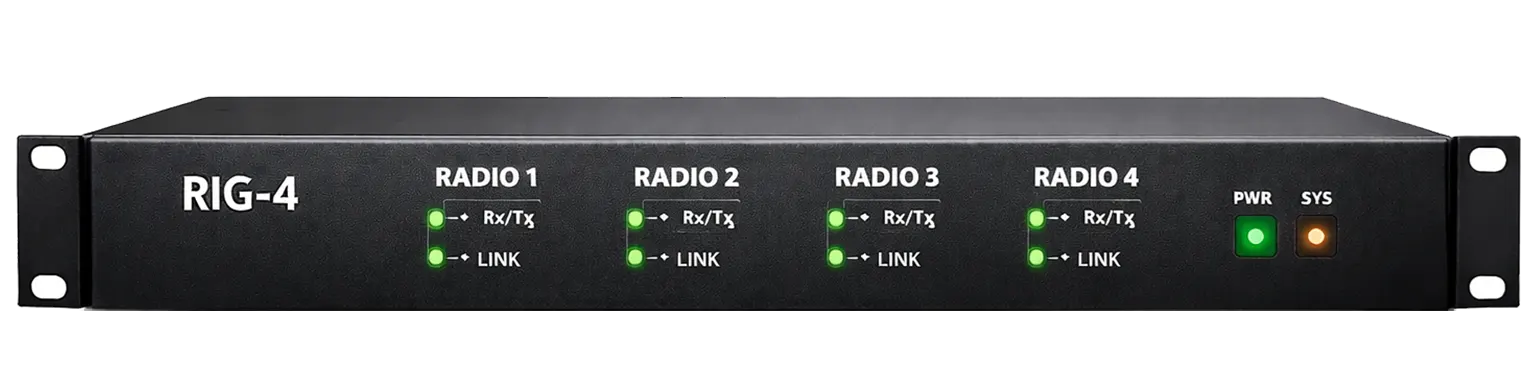
Field radio units are interfaced with the RIG-4 Radio Gateway, which acts as a bridge between RF communication systems and the secure IP network infrastructure of the security agencies. The gateway ensures seamless conversion of radio signals into IP-based communication streams.
The IP backbone further integrates with multiple subsystems, including:
- IP-PBX systems and IP-based telephony endpoints for voice communication
- Push-to-Talk (PTT) applications on desktop and mobile platforms
- IP-based video surveillance systems for real-time monitoring and coordination
This integrated architecture enables secure, reliable, and uninterrupted communication between field personnel, command centers, and support units, ensuring efficient coordination during mission-critical operations.
Results & Benefits
The implementation provided high operational benefits:
✔️ Unified Communication Platform: All the communication systems are based on a common interoperable network.
✔️ Enhanced Command and Control: Command centers will be able to track and control field communications on a real-time basis.
✔️ Improved Situation awareness: Voice, messaging and video feeds gets integrated, which leads to better decision-making.
✔️ Scalable Architecture: It is easy to add more radios, users, and locations.
✔️ Rapid Coordination: Cross-network communication helps in fast exchanging of information when on missions.
✔️ Cost Efficiency: Modern capabilities were added to the infrastructure that was already there.
Conclusion
The StackIOT Radio Interoperability System successfully bridged the gap between legacy radio communication infrastructure and modern IP-based networks within the security communication system. By enabling seamless integration across diverse communication platforms, the solution significantly enhanced operational coordination, improved situational awareness, and strengthened overall mission readiness. The establishment of a unified and scalable communication backbone ensures reliable and efficient information exchange across defense communication environments.