
Modernizing Communication at Industrial Ports with Android-Based Push-to-Talk App Solution
✔️ Client: Large-Scale Industrial Port Authority
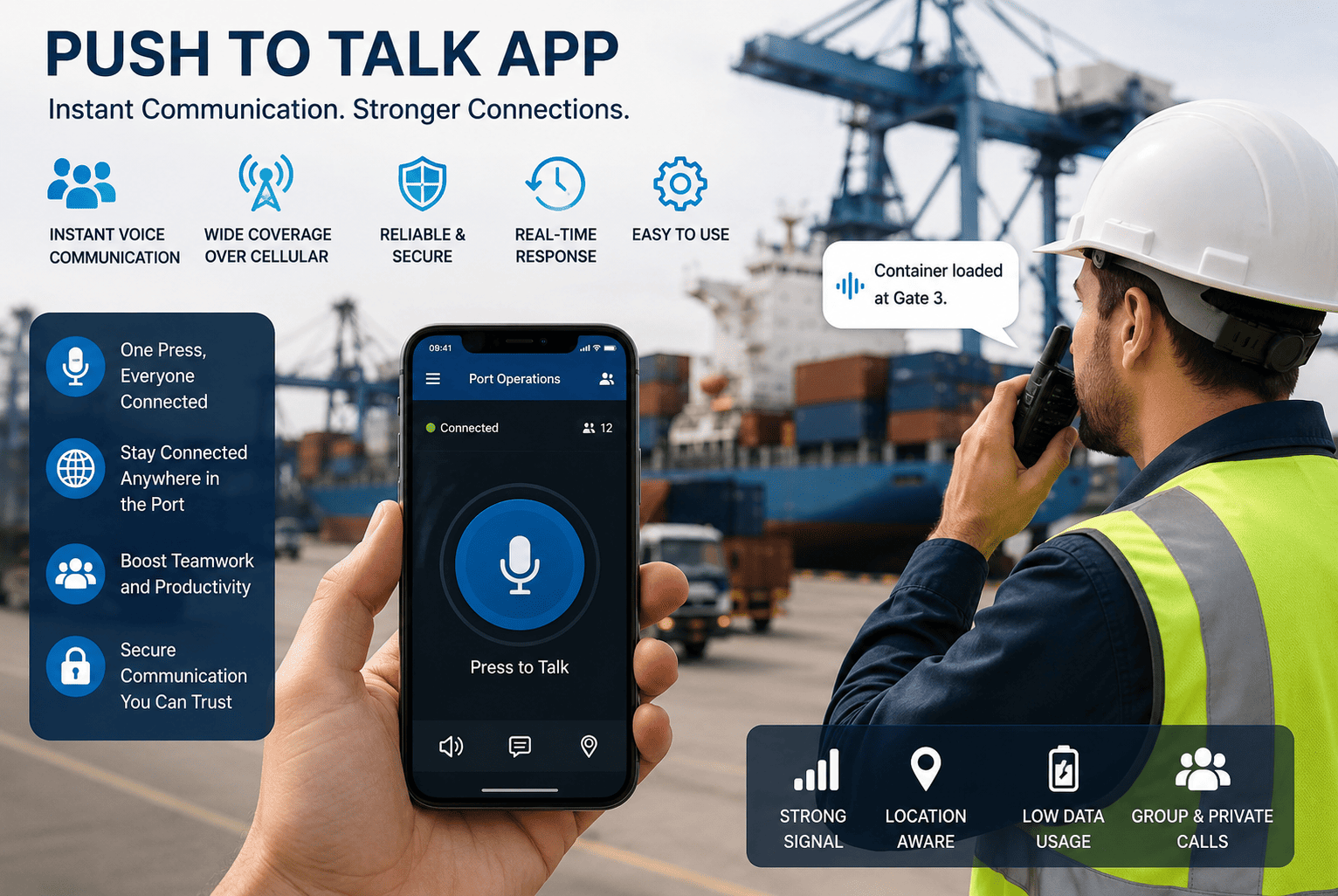
✔️ Solution : StackPTT App (Push-to-Talk over Cellular)
✔️ Developer: Stackiot Technologies Pvt. Ltd
Background
In industrial port environments, multiple critical operations run concurrently: cargo handling, marine coordination, security patrols, and emergency response. Efficient, real-time communication is essential In industrial port environments, multiple critical operations run concurrently: cargo handling, marine coordination, security patrols, and emergency response. Efficient, real-time communication is essential for safety, productivity, and operational continuity. However, traditional radio systems posed several challenges, including limited coverage,reliance on expensive infrastructure, and communication silos between different departments. challenges, including limited coverage, reliance on expensive infrastructure, and communication silos between different departments.
Challenges
The port faced the following key communication obstacles:
✔️ Limited Coverage: Traditional radio networks could not reach all areas of sprawling port, especially remote corners and indoor facilities.
✔️ Infrastructure Dependency & Cost: Maintaining and expanding radio towers and repeaters was costly.
✔️ Interdepartmental Silos: Security, marine operations, and cargo teams could not easily communicate across different radio channels or systems.
✔️ Lack of Modern Features: Legacy radios offered no GPS tracking, geo-fencing, or emergency SOS alerts.
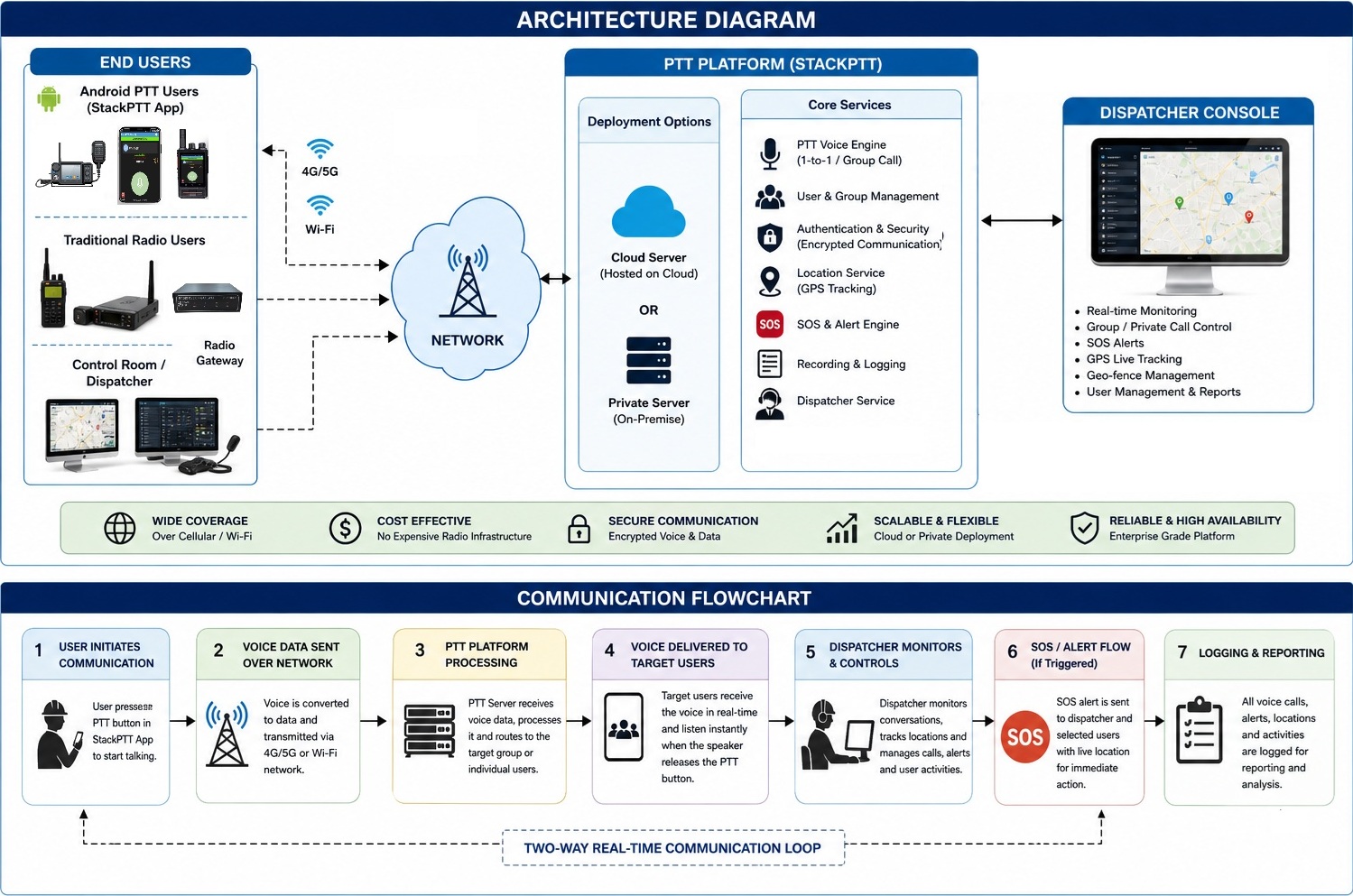
✔️ Integration Needs: The port needed to connect mobile users (smartphones), control room operators, and existing radio users on a single platform without disrupting legacy investments.
Solution Deployed
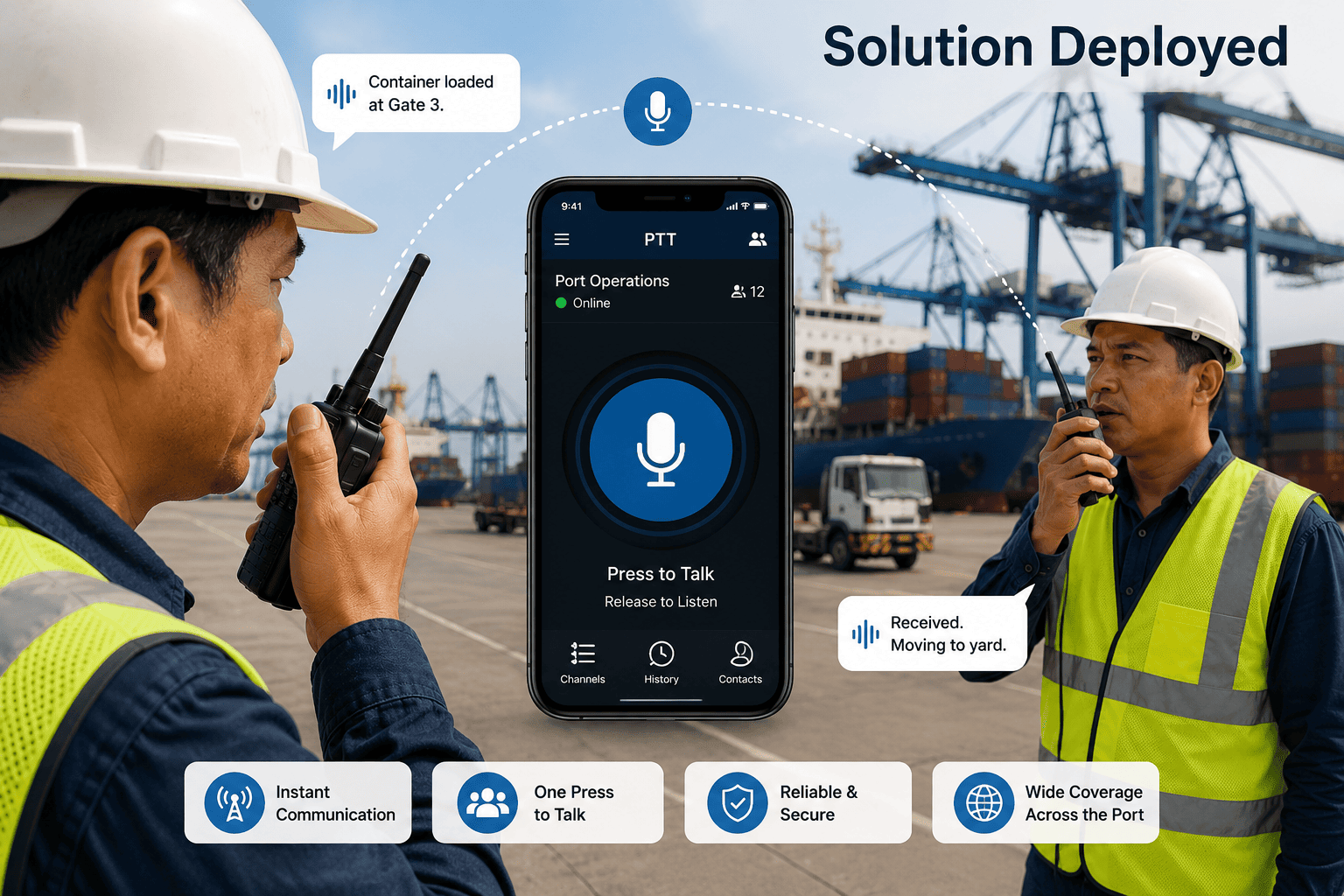
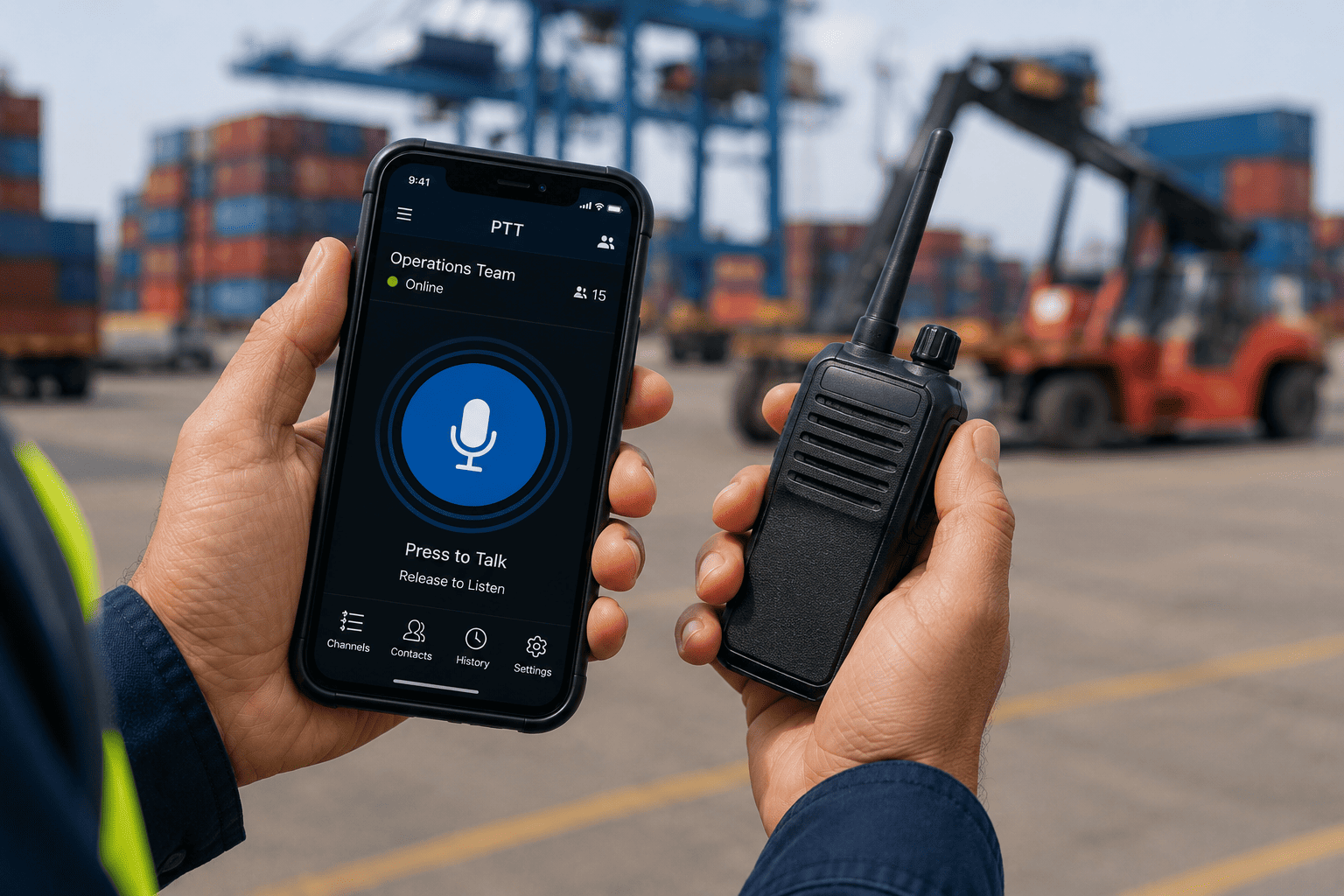
The port implemented StackPTT, an Android-based Push-to-Talk application (PoC) that operates
over cellular or Wi-Fi networks. The solution transformed standard Android devices into digital two-
way radios.Radio Interoperability System consists of two main components:
Key Features Utilized:
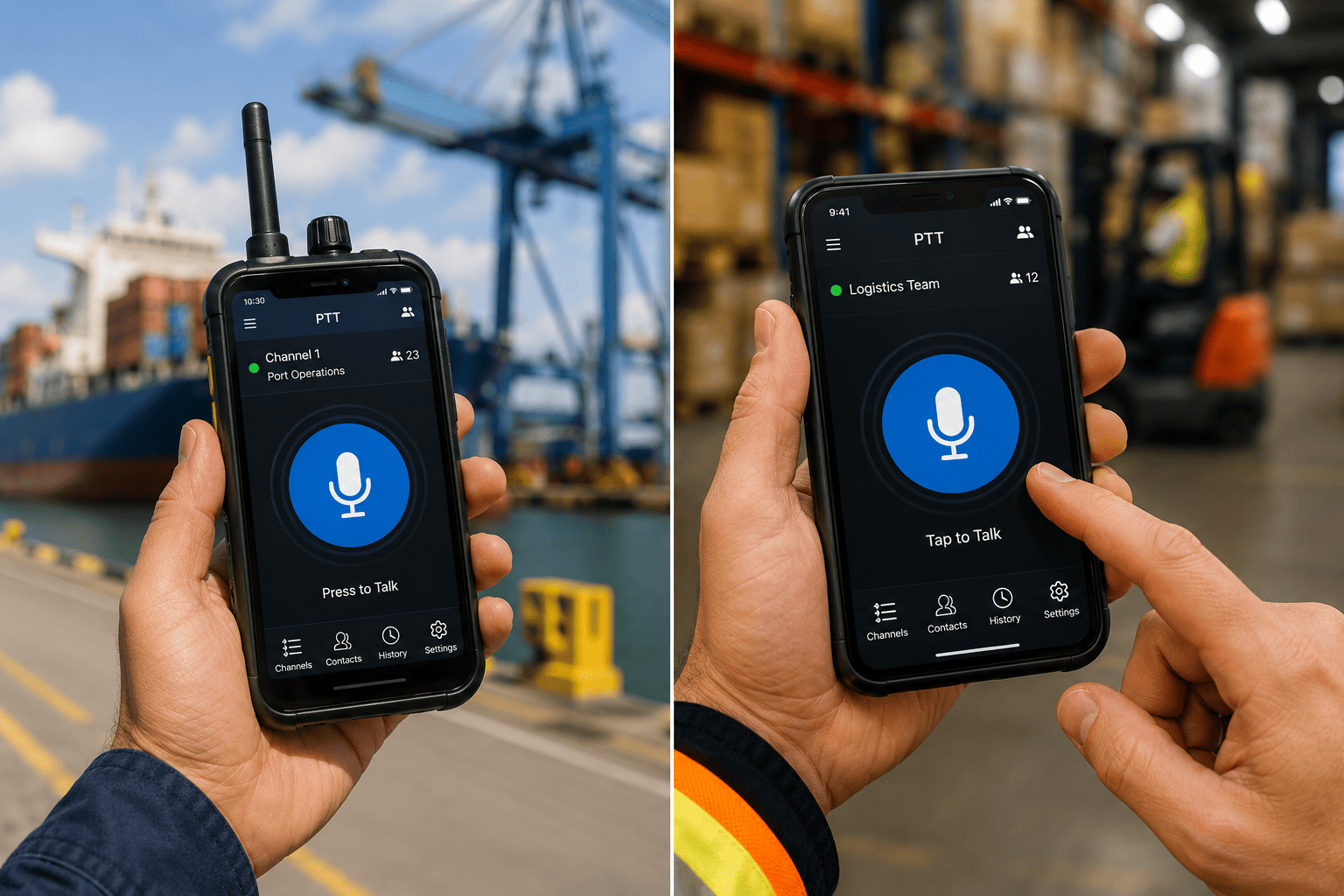
• Instant PTT Communication: One-to-one and group calling with a single button press.
• Cloud & Private Server Options: Hybrid deployment for flexibility and security.
• GPS Integration: Real-time location tracking of all field personnel.
• Dispatcher Console: Centralized monitoring, private/group calling, and emergency management.
• SOS Alerts: Instant distress signals with location data.
• Geo-Fencing: Virtual boundaries that trigger automatic alerts
• Legacy Radio Integration: Integrated traditional radio users and Android app users into the same talk groups.
Deployment Advantages:
✔️ Easy Installation: No extensive infrastructure modifications were required.
✔️ Wide Coverage: Leveraged existing cellular networks across the entire port..
✔️ Cost-Effective: Reduced need for new radio hardware; used existing smartphones and android radio.
✔️ Gradual Migration: The port could phase out old radios over time without disrupting daily operations.
Results & Benefits
| Area | Outcome |
|---|---|
| Communication Efficiency | Real-time cross-departmental communication eliminated silos. |
| Response Time | Faster coordination for cargo handling and emergency incidents. |
| Operational Visibility | Dispatchers gained live GPS tracking and location history. |
| Safety Enhancement | Geo-fencing and SOS alerts improved worker safety, especially in remote areas. |
| Interoperability | Legacy radio users and Android app users communicated seamlessly in mixed talk groups. |
| Cost Savings | Reduced reliance on expensive radio infrastructure and maintenance. |
Conclusion
This case study demonstrates how an Android-based Push to talk app solution like StackPTT can
revolutionize industrial port communications. By combining mobility, real-time visibility, and the
ability to integrate with legacy systems, the solution provides a future-proof, scalable communication
platform that enhances both operational efficiency and worker safety — all with minimal deployment
complexity.